
Mechanobiology & Regenerative Medicine
Mechanical regulation of bone, nerve and other tissue repair processes.
MechanobiologyResearch Areas
We investigate how mechanics regulates living systems and translate fundamental mechanisms into biomaterials, flexible devices and medical applications.
Research Framework
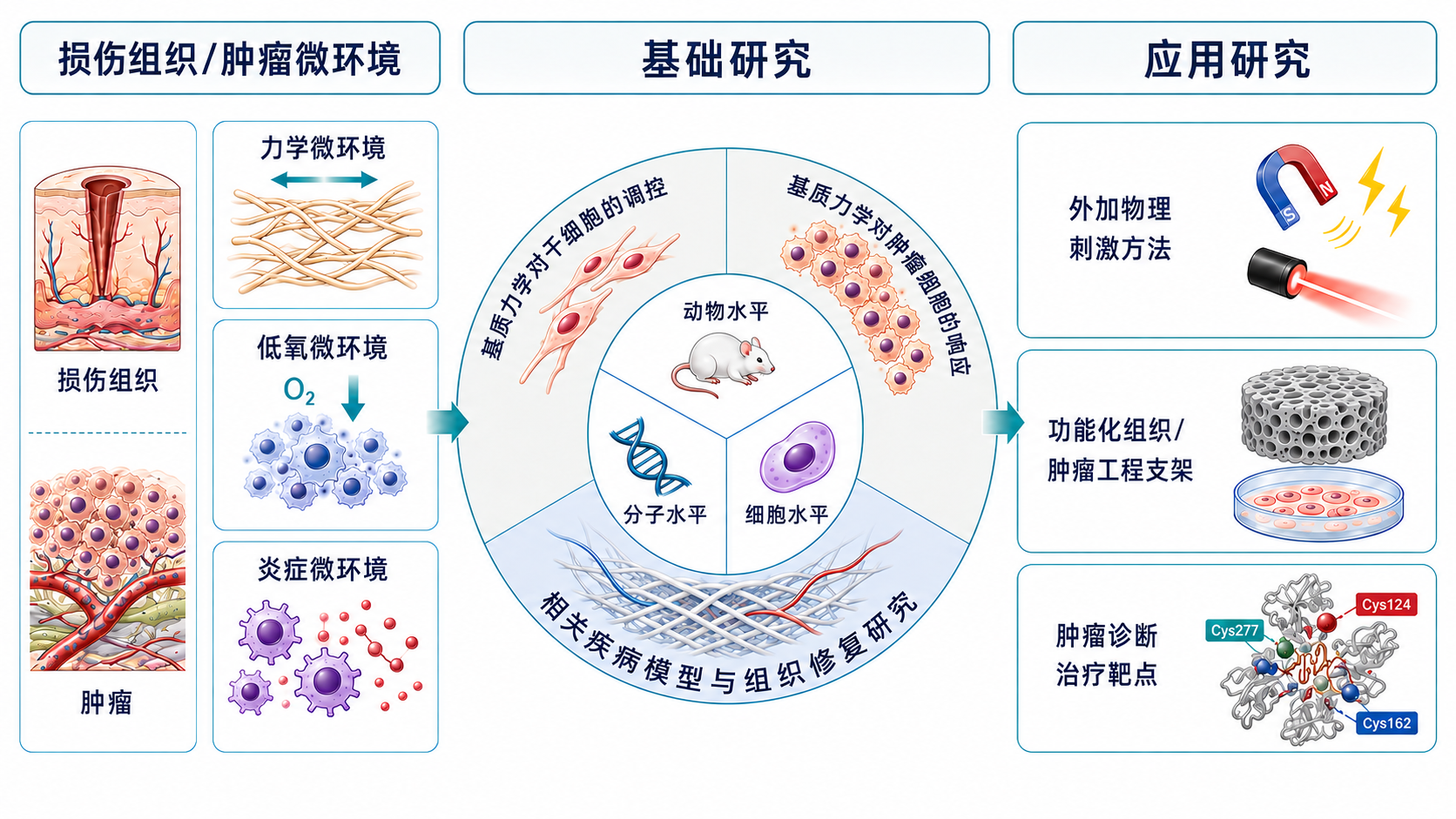
Research subjects: injured tissues and tumors
Animal, cellular and molecular levels
Tissue repair and tumor diagnosis and treatment
Research Areas
We connect fundamental mechanobiology with materials, devices and biomedical applications.
Mechanical regulation of bone, nerve and other tissue repair processes.
MechanobiologyFlexible sensors and wearable biomedical devices for monitoring and interaction.
WearablesFunctional biomaterials for diagnosis, therapy and tissue reconstruction.
BiomaterialsMechanics and microenvironmental cues in tumor migration and metastasis.
Tumor BiologyIntelligent drug delivery systems and multimodal tumor therapy.
NanomedicineLiquid-metal-based materials for repair, devices and therapeutic applications.
Liquid Metal